Rigged by Design: The Hidden Tricks Online Casinos Use to Keep You Glued to the Screen

You open the app intending to spin for twenty minutes. Ninety minutes later, you're still there, vaguely unsure how it happened. The pokies didn't cheat you. The odds didn't shift. But something kept you in the seat — and it wasn't luck.
That something is design. Deliberate, meticulously tested, psychologically sophisticated design. And once you see the machinery underneath it, you genuinely can't unsee it.
The Architecture of Attention
Casino platforms — particularly the online ones dominating the Australian market right now — aren't just built to house games. They're built to consume your attention the way a Venus flytrap consumes a fly. The trap looks inviting right up until it closes.
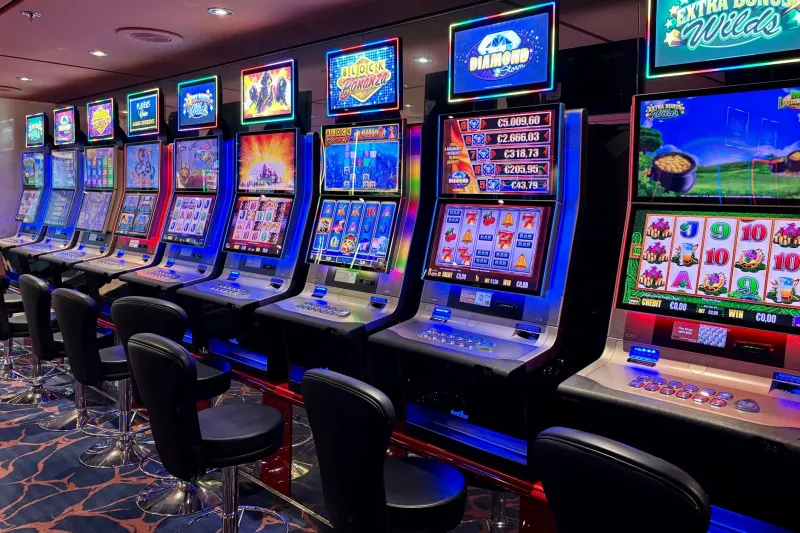
The foundational principle at work here is something behavioural scientists call variable reward scheduling. It's the same mechanism that makes social media feeds so stupidly hard to put down. You don't know when the next reward is coming, which makes you keep going far longer than you would if rewards were predictable. Pokies are essentially variable reward machines wearing a costume. The flashing lights and jingles aren't decoration — they're the reinforcement loop, firing every time something almost works, or occasionally does.
Designers know this. They engineer it. The question is whether you know it too.
Red, Gold, and the Colour of Urgency
Have a look at the colour palette next time you load up a popular Aussie casino platform. Chances are you're swimming in deep reds, burnt oranges, and aggressive golds. This isn't a coincidence or a branding accident.
Red is physiologically activating. Studies consistently show it raises heart rate and creates a mild sense of urgency — the same psychological state that makes people spend faster and think slower. Gold reads as reward, as jackpot, as winning. Together, they create a visual environment that keeps your nervous system slightly elevated, which is exactly where operators want you.
Cooler colours — blues, greens, the kind of palette that signals calm and rational thinking — are largely absent from the core game interface. They show up occasionally in help sections or responsible gambling pages. Which tells you everything you need to know about what those colours actually communicate.
Sound Design: The Invisible Hand
Kill the audio on a pokie and the experience becomes almost boring. That's not an accident — it's a confession.
Sound design in casino games is one of the most sophisticated psychological tools in the industry. Near-miss sounds — those almost-wins that trigger the same auditory celebration as actual wins — are deliberately engineered to feel like victories even when they aren't. Your brain doesn't fully distinguish between the sound of winning and the sound of nearly winning. Both release dopamine. Both keep you spinning.
Beyond individual game sounds, platforms layer in ambient casino audio — a low hum of activity, distant chimes, the suggestion of other people winning nearby. It creates a social proof effect even in a completely solitary digital environment. The message your brain receives: this is a place where wins happen.
Australian operators are particularly aggressive with sound layering in mobile apps, where users often play with headphones in, making the immersion even more complete.
The Interface Is Not Your Friend
Let's talk about the actual layout of these platforms, because the user experience design is doing a lot of heavy lifting you probably haven't noticed.
The deposit button is always prominent, always accessible, often one tap away. The withdrawal process, by contrast, typically involves multiple steps, verification requirements, and processing delays. This asymmetry isn't a technical limitation — it's a deliberate friction strategy. Making it easy to put money in and harder to take it out keeps the float in the system longer.
Game lobbies are similarly engineered. The highest-volatility pokies — the ones with the biggest potential wins but the worst average return — are consistently featured in prime positions. New releases get banner placement. Jackpot tickers run in real time, displaying ever-climbing numbers that create a sense of mounting opportunity. The message is constant: the big win is always just around the corner.
Autoplay functions deserve special mention here. They exist to reduce the friction of decision-making. Every time you manually hit spin, there's a micro-moment where you could choose to stop. Autoplay eliminates those moments entirely, converting an active choice into a passive drift.
Notifications: The Long Arm of the Platform
Once a casino has your phone number and permission to send push notifications — which you almost certainly granted during signup without thinking twice — the engagement strategy extends well beyond your actual play sessions.
The timing of these notifications is studied carefully. Platforms send them during periods of historically high engagement (Friday evenings, Sunday afternoons, post-payday windows) and during periods of recent inactivity, when a well-timed offer can pull a lapsed player back in. The language is engineered too: urgency words, personalised references to your favourite games, limited-time framing that creates artificial scarcity.
"Your free spins expire in 2 hours" is not a helpful reminder. It's a psychological lever.
Loyalty Programs and the Sunk Cost Trap
VIP tiers and loyalty point systems are another layer of the architecture worth examining. Once you've accumulated points, achieved a status level, or unlocked a particular bonus threshold, the psychology of sunk cost kicks in hard. You've invested in this platform. Leaving feels like abandoning something you've already earned.
This is the golden handcuff mechanism, and Australian platforms have become exceptionally good at deploying it. Cashback offers, reload bonuses, and personalised promotions are all calibrated to your individual play history — specifically timed to re-engage you when your activity is dropping off.
Seeing the Trap Is Half the Battle
Here's the thing: none of this means you can't enjoy casino gaming. Plenty of Aussie punters play regularly, responsibly, and with a clear head. But they tend to share one characteristic — they understand the environment they're operating in.
Knowing that the red-and-gold palette is designed to activate you means you can consciously slow down. Recognising that autoplay is removing your decision points means you can choose to spin manually. Understanding that near-miss sounds are engineered to feel like wins means you can recalibrate your emotional response to them.
The casino's playbook is sophisticated. But it only works at full strength when you're not looking at it.
Set your session limits before you open the app. Turn the sound off occasionally and notice how differently you feel. Use the manual spin option. And if a notification is pulling you back in at an inconvenient time, ask yourself whether that's your decision or the platform's.
Go hard if you want to — but go in with your eyes open.