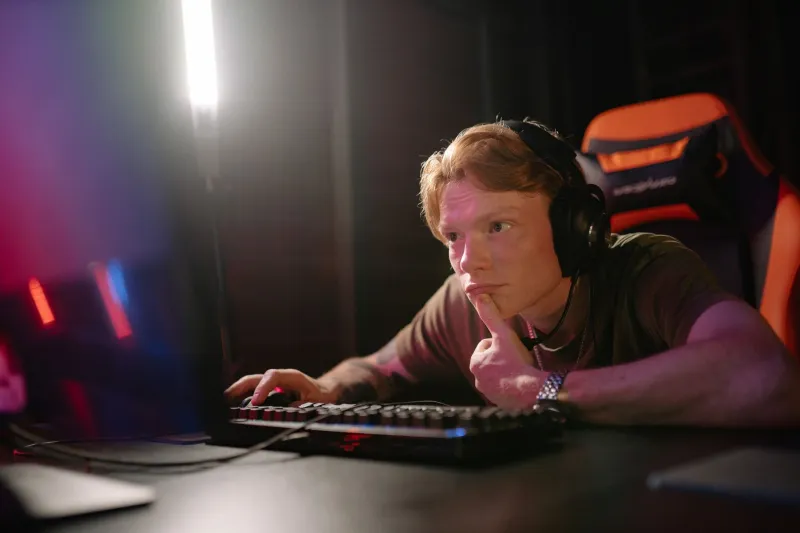
When the Rush Becomes the Trap: The Real Price of a High-Intensity Betting Session
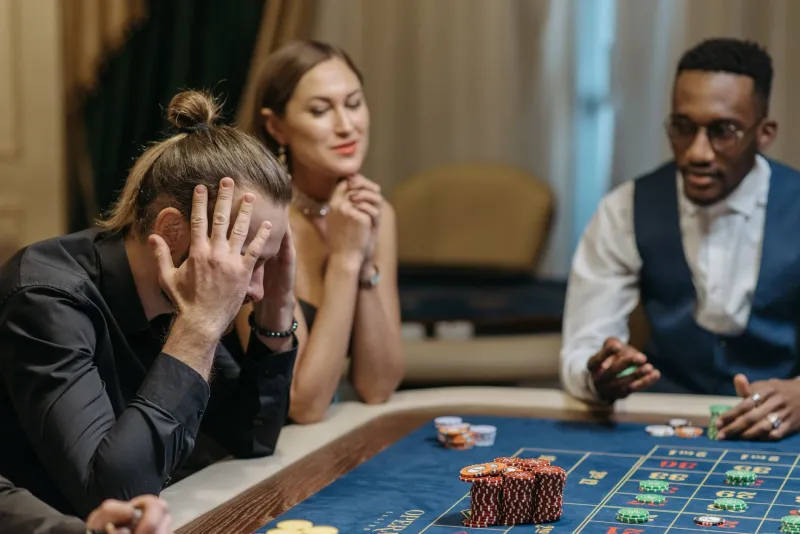
There's a moment every serious punter knows. You're two hours deep into a session, the adrenaline is absolutely screaming through your chest, and the numbers on the screen have somehow stopped feeling real. That's not a vibe. That's a warning sign — and most of us blow straight past it.
At Extreme Casino AU, we're all about going hard. But going hard intelligently means understanding what's actually happening to you when a session gets wild. Because the house edge is only one part of what's eating your bankroll. The other part? That's you — or more precisely, what high-intensity gambling does to the decision-making machine between your ears.
Your Brain on Adrenaline: It's Not Pretty
When you're riding a hot streak or chasing a brutal loss, your body dumps cortisol and adrenaline into your bloodstream like it's an emergency. Because as far as your nervous system is concerned, it is one. Heart rate climbs. Pupils dilate. And critically — the prefrontal cortex, the part of your brain responsible for rational risk assessment, starts getting drowned out by the more primal regions screaming "more, faster, now."
Neuroscience researchers at the University of Sydney have documented how elevated stress hormones specifically impair the brain's ability to calculate probability accurately. You don't just feel like the next spin is due — your brain is literally processing it that way. The house edge is maybe 4-5% on a bad pokie. Your impaired risk assessment during a full adrenaline spike? That's a cost you can't even quantify on a spreadsheet.
This is what we're calling the adrenaline tax. It's real, it's measurable, and it hits hardest during exactly the kind of sessions that feel the most electric.
Decision Fatigue: The Slow Bleed Nobody Talks About
Here's something that doesn't get enough airtime in Aussie gambling circles: the longer your session runs, the worse your decisions get — and not because you're unlucky. It's biology.
Decision fatigue is the documented psychological phenomenon where the quality of your choices degrades the more decisions you make. Judges give harsher sentences before lunch. Surgeons make more errors late in a shift. And punters? They start making bets they'd never touch with fresh eyes.
Take Brendan, a 34-year-old tradie from Brisbane who shared his experience on a local gambling forum. He'd started a Saturday session with a strict $300 limit, playing high-volatility pokies with genuine discipline. Four hours in, having cycled through wins and losses, he'd quietly abandoned every rule he'd set for himself — increasing bet sizes, chasing feature rounds he knew were statistically irrelevant, and eventually blowing well past his limit. "I knew I was done," he wrote. "I just couldn't make myself stop. It's like the part of my brain that knew better had clocked off."
That's decision fatigue doing exactly what it does. The money cost was significant. The psychological cost — the self-recrimination, the disrupted sleep, the damaged confidence — ran much deeper.
Time Distortion: The Casino's Oldest Trick (And Your Worst Enemy)
Online casinos, like their land-based counterparts, are engineered to make time disappear. No clocks. Autoplay features. Seamless loops between spins or hands. It's not accidental — it's architecture.
Research consistently shows that gamblers dramatically underestimate how long they've been playing. What feels like 45 minutes is frequently two hours or more. And every additional hour doesn't just represent more bets — it represents a compounding deterioration in the quality of every choice you make.
For Aussie punters especially, this is a sneaky one. We're culturally wired to be resilient, to push through, to not complain. The "she'll be right" mentality that makes us great in a lot of situations becomes actively dangerous when you're four hours into a high-volatility session and your brain is running on fumes and stubbornness.
Set a timer. Not a mental note — an actual alarm on your phone. It sounds basic, but it's one of the most effective circuit-breakers against time distortion that exists.
Emotional Volatility: Winning Hurts Too
Here's the counterintuitive part: big wins during an intense session can be just as cognitively damaging as losses. Maybe more so.
When you score a massive hit mid-session — a pokie feature that pays out 200x, or a long-odds bet landing — your brain floods with dopamine. Confidence inflates rapidly and often irrationally. Suddenly bets that seemed too large five minutes ago feel conservative. The mental accounting shifts: "I'm playing with house money now," which is, from a purely mathematical standpoint, complete nonsense. Every dollar is a dollar, regardless of its origin.
Sarah, a 28-year-old from Melbourne who describes herself as a recreational punter, recounted hitting a significant jackpot during a late-night session. Rather than cashing out, the win triggered what she called "invincibility mode." She played for another three hours, eventually giving back the jackpot and more. "The win felt like permission," she said. "Like I'd earned the right to go bigger. I hadn't. I just got lucky once."
Emotional volatility — the swings between elation and desperation — is itself a form of cognitive impairment. Your decisions during those peaks and troughs are not your best decisions. Full stop.
The Compounding Effect: When Everything Hits at Once
Here's where it gets genuinely nasty. Decision fatigue, time distortion, adrenaline-impaired risk assessment, and emotional volatility don't operate in isolation during a long session. They stack. They compound. They interact.
An hour into a session, you're sharp. Three hours in, fatigued and emotionally charged, you're operating at a fraction of your actual capacity — and the financial consequences multiply accordingly. The mathematical edge the casino holds hasn't changed, but your ability to manage your exposure to it has cratered.
This is the real adrenaline tax. It's not just what you lose in the session. It's the difference between what you would have lost playing with full cognitive capacity versus what you actually lost playing on empty.
Playing Extreme Doesn't Mean Playing Blind
None of this means pulling back from high-volatility play or extreme betting sessions. That's not what Extreme Casino AU is about, and it's not what this article is arguing. What it means is going in with your eyes properly open.
Know your session limits before you start — time limits, not just dollar limits. Build in mandatory breaks every 60-90 minutes, not because you're weak, but because you're smart enough to understand the science. Recognise the signs that you're running on adrenaline rather than judgement: impulsive bet sizing, irritability, the feeling that you're "owed" something by the game.
The punters who genuinely thrive in high-intensity environments aren't the ones who ignore these costs. They're the ones who account for them, plan around them, and stay dangerous for longer because of it.
Go hard. But go hard with your head still in the game.