One More Run: The Dangerous Psychology Behind Chasing Casino Losses

Picture this: a big-wave surfer eats it hard off the back of a 10-metre swell at Shipstern Bluff. They surface, gasping, board snapped. And within minutes, they're paddling back out. Not because they're reckless. Because every fibre of their competitive wiring is screaming that the next wave is the redemption wave.
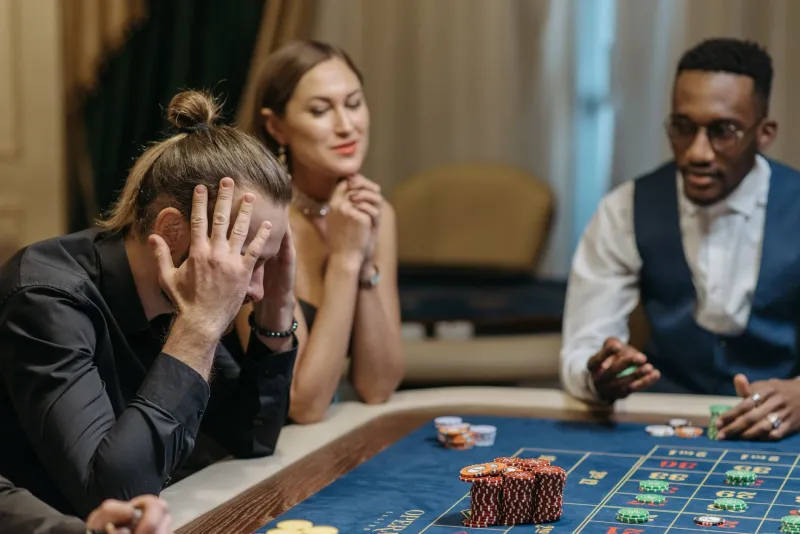
Now picture a punter three hours deep into a pokies session at an online casino. Down $400. Heart rate elevated. Jaw tight. And they're thinking — almost word for word — the same thing. One more run.
The scenarios look completely different on the surface. But neurologically? They're running the same operating system. And that's exactly what makes loss-chasing one of the most misunderstood — and underestimated — traps in Australian gambling culture.
Your Brain on a Bad Beat
Sports psychologists who work with elite action sports athletes have long understood the concept of emotional momentum — the way a setback can paradoxically increase the drive to re-engage with the source of the pain. It's a feature, not a bug, in competitive sport. The athlete who shrugs off a fall and immediately wants another attempt often outperforms the one who retreats to overthink it.
The problem is that the same neurochemical cocktail — a spike in cortisol, a dip in dopamine, and the brain's frantic attempt to restore equilibrium — fires identically whether you're clipped out of a halfpipe or just watched three cherries refuse to line up for the fifth consecutive spin.
Dr. Lara Hutchins, a sports and behavioural psychologist based in Melbourne who has worked with both elite athletes and problem gamblers in recovery, puts it plainly: "The brain doesn't distinguish between a competitive setback and a financial one at the neurological level. Both register as a threat to self-concept, and both trigger the same compensatory drive. The difference is that in sport, the environment provides natural circuit-breakers — exhaustion, injury, weather, coaches. In online gambling, those circuit-breakers don't exist unless you build them yourself."
That absence of a natural stop is where the wheels fall off.
The Athlete's Edge That Becomes the Punter's Trap
There's a particular breed of Australian punter that's worth talking about here — the high-stimulus seeker. The person who finds standard recreational activities a bit flat. Who gravitates toward volatility, whether that's in sport, career choices, or the casino games they prefer. Research consistently shows this personality type is disproportionately represented among both extreme sports enthusiasts and high-frequency gamblers.
For the athlete, that trait is often an asset. Comfort with risk, tolerance for failure, and a refusal to accept defeat are qualities that coaches actively cultivate. But those same traits, transplanted into a casino context without the scaffolding of training, team support, and physical consequence, become liabilities almost immediately.
Jamie, a 34-year-old former competitive snowboarder from Canberra who now describes himself as a recovered problem gambler, recalls the transition with uncomfortable clarity. "When I was competing, pushing through after a bad run was just part of the process. You fell, you got up, you went again. That was the whole culture. When I started gambling seriously, I brought that same attitude with me. Every loss was just a setback I needed to push through. It took me two years and a lot of money to figure out that there was no 'other side' to push through to."
Jamie's story isn't unusual. The mental framework that elite sport builds — persistence, resilience, high pain tolerance — doesn't translate to the casino floor. In fact, it actively works against you.
Why the Maths Makes It Worse
Here's the cruel twist that distinguishes gambling losses from sporting setbacks: in extreme sports, the athlete's skill genuinely influences outcomes over time. More training means better performance. The feedback loop is real.
In casino gaming — particularly in pokies and other RNG-based games — past results have zero bearing on future outcomes. The machine doesn't know you're down $400. It doesn't owe you a recovery run. Every spin is statistically identical to the last.
But the brain, running on competitive wiring and cortisol, doesn't process it that way. It interprets the loss streak as a pattern to be overcome rather than random noise to be accepted. It constructs a narrative of deserved redemption that simply doesn't exist in the mathematics of the game.
This is the core of what researchers call the "gambler's fallacy" — the deeply intuitive but entirely incorrect belief that a run of bad outcomes makes a good outcome more likely. In sport, that intuition is sometimes justified. In pokies, it's categorically not. And yet the brain keeps reaching for it, especially under emotional stress.
Recognising the Line
So how do you know when you've crossed from calculated risk-taking — which is a legitimate part of any serious punter's toolkit — into self-destructive loss chasing? The markers are more behavioural than financial.
Sports psychologist Dr. Hutchins identifies a few key red flags:
You've revised your session limit upward more than once. One adjustment can be a rational response to new information. Multiple upward revisions mid-session are almost always emotional, not strategic.
The goal has shifted from winning to recovering. There's a meaningful difference between playing to win and playing to get back to even. The second mindset is defensive and reactive — and it tends to produce worse decisions.
You're no longer enjoying the session. This sounds obvious, but it's frequently overlooked. When the experience stops being fun and starts being anxious, the brain has moved out of recreation mode and into threat-response mode. That's not a good state for decision-making.
You'd be embarrassed to describe your last hour to someone you respect. The 'sober observer' test is blunt but effective. If you can't narrate your recent decisions without wincing, that's information worth acting on.
Building Your Own Circuit-Breakers
Since the casino environment won't provide natural stopping points, serious punters need to engineer them in advance — before the session starts, not during it. This is standard practice in elite sport psychology and it applies directly here.
Set hard loss limits and write them down. The physical act of documenting a commitment makes it meaningfully harder to rationalise abandoning it mid-session. Tell someone your limit before you start playing — accountability structures work.
Build in mandatory breaks. Extreme athletes don't train to exhaustion without recovery periods; punters shouldn't either. A 10-minute break away from the screen after a significant loss can interrupt the cortisol cycle before it fully takes hold.
And if you find yourself regularly overriding the limits you set for yourself — if the 'one more run' voice keeps winning — that's not competitive spirit. That's a pattern that deserves serious attention. Resources like Gambling Help Online (1800 858 858) exist precisely for this, and there's no shame in using them.
The extreme punter's edge is knowing when to go hard. But the real skill — the one that separates the sharp operators from the ones who blow up — is knowing when to go home.